

Mill Falls Montessori Chartered Public School creates life-long learners by providing an intellectually rich and challenging experience delivered through the Montessori tradition. In a safe and peaceful setting, dedicated educators foster students’ individuality, creativity and critical-thinking skills to fully prepare them for future scholastic, civic and personal success.
Our Mission:
High Academic Achievement & Standards • Individualized Learning • Fostering of Creativity & Curiosity • Successful Montessori Programming • Nurturing Social & Emotional Growth • Mixed-age Classrooms • Respectful & Kind School Environment • Development of 21st Century Learners • Service-Learning Opportunities • Integral Parent/Guardian Engagement • A Strong School Community Led by Qualified & Nurturing Educators.
Our Vision:
At Mill Falls students find joy in their educational journey, comfort in developing at their own pace, and pride in reaching their fullest potential in a public school setting. Strong relationships with New Hampshire leaders, businesses and families will create an economically sustainable charter school firmly rooted in the community.
Our Commitment:

About Montessori
The History
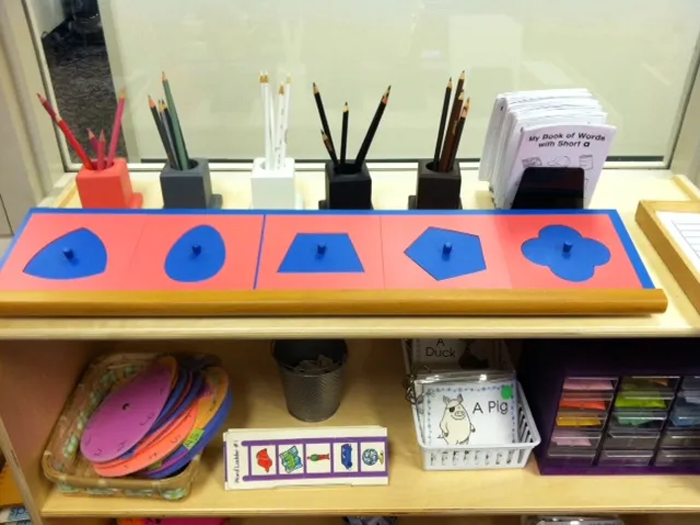
The Montessori method is a world-renowned technique that was developed in the early 1900’s by Dr. Maria Montessori who sought to deliver high quality education to the poorest of children living in Rome, Italy. Characterized by multi-age classrooms filled with hands-on materials that enable students to self-correct as they learn, the Montessori approach allows children to experience success at each phase of their educational journey. Alongside the children’s academic work, Montessori teachers also nurture and observe the students’ social and emotional growth, thus taking into consideration the ‘whole child.’ Today the Montessori method is used worldwide in both public and private settings, educating children from pre-K through high school. There are over 6,000 Montessori schools in the United States, just over 400 of them are public.
Renowned Education Innovator, Dr. Maria Montessori
The Italian educator and physician, Dr. Maria Montessori, was the first Italian woman to receive a medical degree. Dr. Montessori designed curricula, unique materials and an individualized approach to education based on the academic, developmental and psychological needs of children. She was nominated for the Nobel Peace Prize twice for her work in areas of peace and conflict resolution.
The Approach
Montessori emphasizes learning through all five senses, not just by hearing through the act of listening, or seeing by observing and reading. Children in Montessori classes learn at their own, individual pace and are able to choose from a variety of activities in their classrooms. Learning is an exciting process of discovery, leading to concentration, motivation, self-discipline, independence, and a love of learning. Montessori classes place children in three-year age groups (eg: grades 1-3; 4-6), forming communities in which the older children spontaneously share their knowledge with the younger ones.
Montessori teachers are not stationed at the front of the room, but rather they travel from area to area, meeting the children where they are, working with them individually and in small and large groups and using their skills and tools of observation to continually assess the academic and social needs of their students.
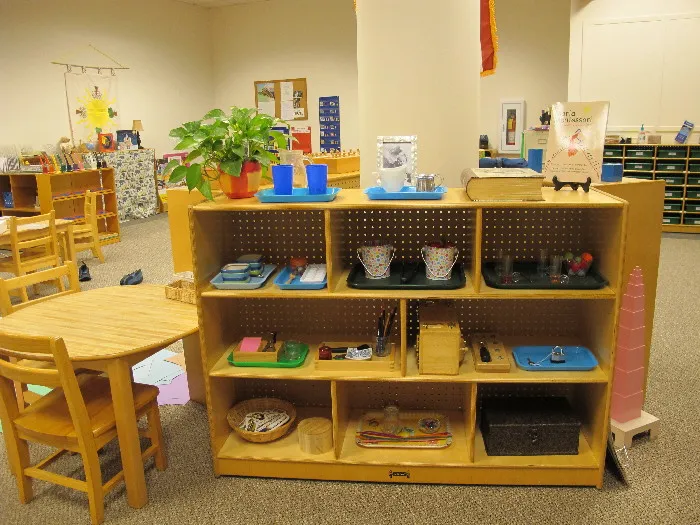
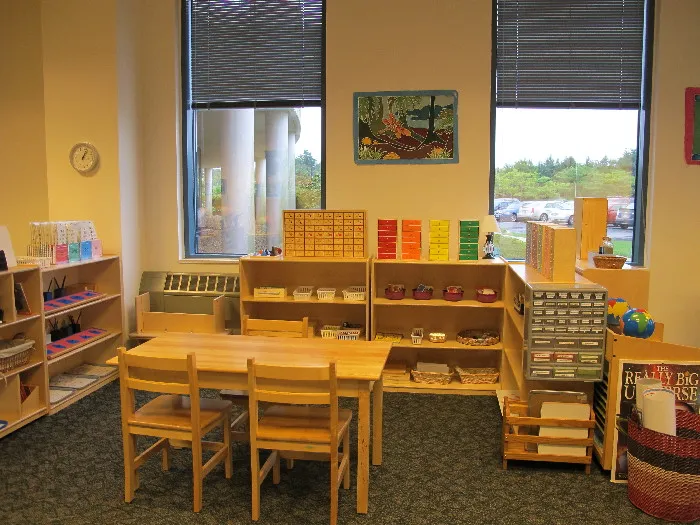
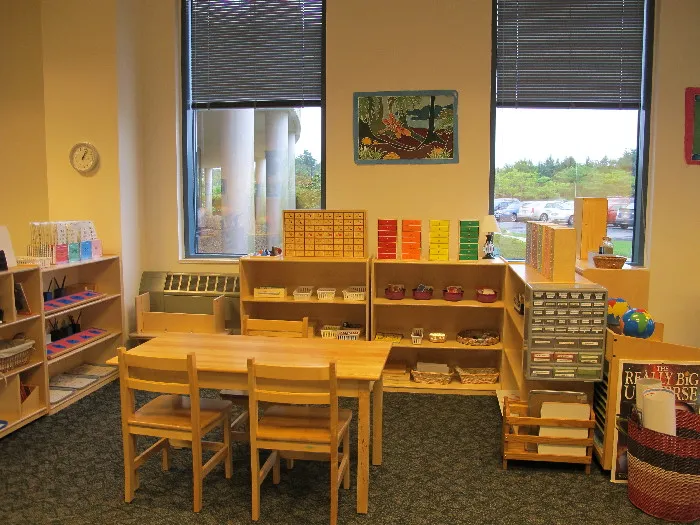
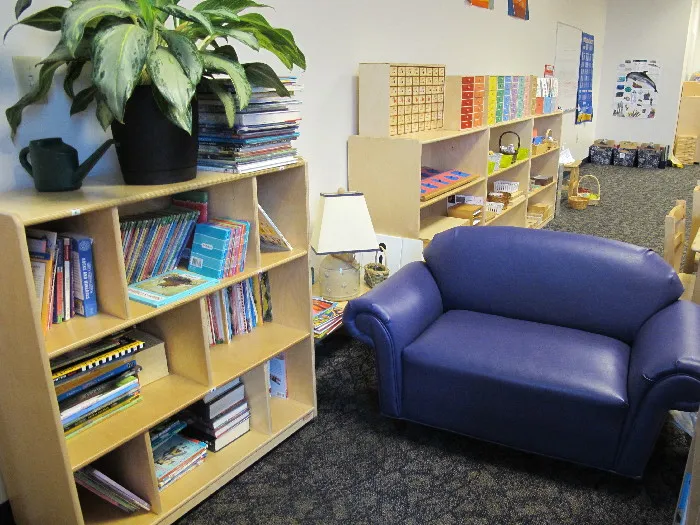
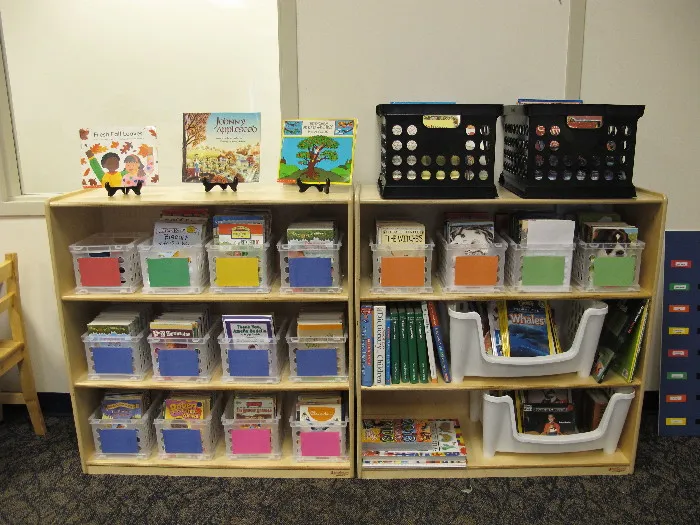
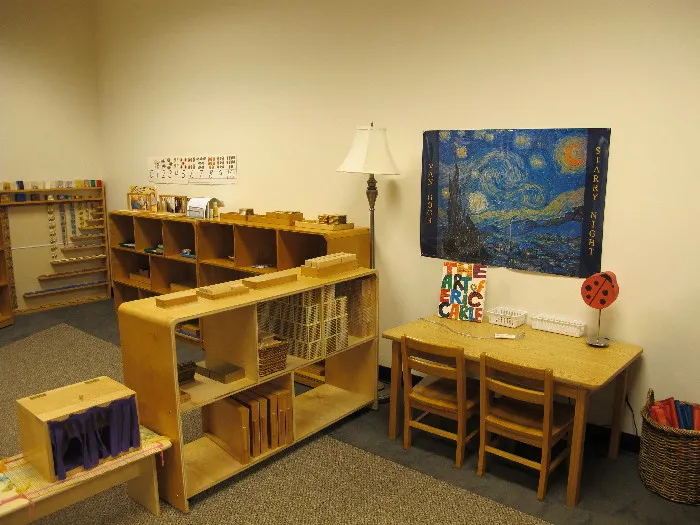
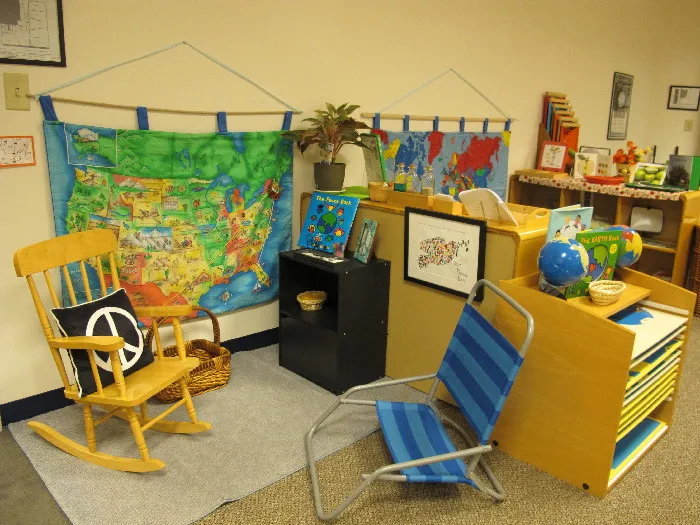
The Montessori classroom is a prepared environment organized by curricular areas. Students work in 3 hour work-cycles. They learn time management and executive functioning skills as they manage their time and complete their work plans on a daily/weekly basis. By partnering with fellow students, they learn the power of collaboration and develop important leadership and speaking skills as well.
Building a Future Mill Falls Middle School
Mill Falls is thrilled to announce that we are currently in the planning phase of a federal Charter School Project (CSP) Expansion Grant. These federal funds are designed to help us build a future Mill Falls Middle School, grades 7-8. Our proposal was approved in April 2025, and we will have access to these funds through the summer of 2026.
Curricular work which is well underway. The team is thoughtfully integrating instructional design, social-emotional learning, and wellness-based leadership to develop a comprehensive, engaging program that supports student growth and development.
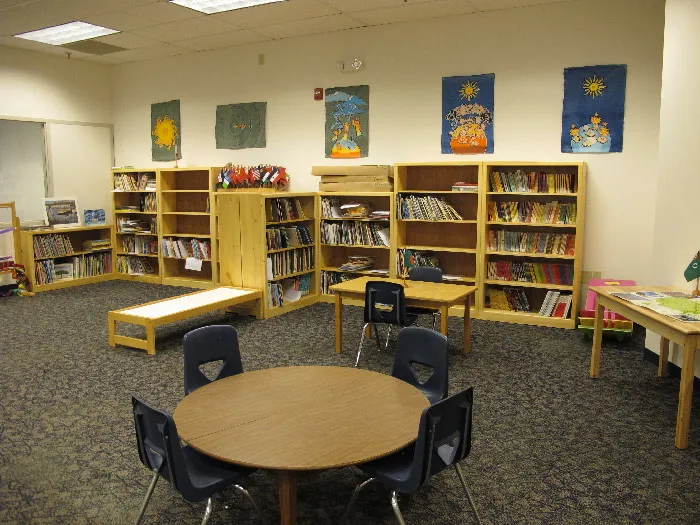
Mill Falls Classrooms
“Education should no longer be mostly imparting knowledge, but must take a new path, seeking the release of human potentials.“
-Dr. Maria Montessori
External Resources
American Montessori Society (AMS) provides the leadership and inspiration to make Montessori a significant voice in education. The Society advocates quality Montessori education, strengthens members through its services, and champions Montessori principles to the greater community.
The mission of Public Montessori in Action International is to ensure fully-implemented Montessori education for children, families, and educators of the global majority. Led by renown Montessori, Elizabeth Slade, Mill Falls partners with Public Montessori in Action in ongoing evaluation and improvement of the fidelity of our public Montessori program.
The National Center for Montessori in the Public Sector supports and sustains public Montessori schools, leaders, and teachers, while growing and connecting a national public Montessori community.
Montessori Related Links:
Videos:
Mill Falls Parent Voices: View this video which shares the voices of Mill Falls Parents about the impact of our public Montessori Program.
This animation explaining Montessori
which is featured on the website, Montessori Madness, a site for and by Trevor Eissler – the father of three Montessori students, a business jet pilot, children’s book author, and international speaker. His book, Montessori Madness! explores how Montessori education best prepares children for the real world.
“Imagine a School: Montessori for Elementary Aged Children” combines scenes from two public and four private Montessori schools to show the effectiveness of this philosophy of education. Covers: Hands-on materials, cooperative learning, multiage learning communities, self-paced/self-initiated learning, uninterrupted work time, respect for other cultures and more.
Outcomes for Students in a Montessori Program: A Longitudinal Study of the Experience in the Milwaukee Public Schools. This study supports the hypothesis that Montessori education has a positive long-term impact. Additionally, it provides an affirmative answer to questions about whether Montessori students will be successful in traditional schools.
Montessori Science - Dr. Angeline Lillard, professor of psychology at the University of Virginia, has been studying Montessori’s methods for more than two decades. In her best-selling book Montessori: The Science behind the Genius, articles, educational DVD, and speaking engagements Dr. Lillard presents Montessori’s theoretical principles, the science research that has followed them, and how they are implemented in a Montessori classroom.
Mill Falls Rises by Dane Peters looks at our program at Mill Falls in the context of the growth of public Montessori programs in the US.
Montessori Research Links:
Required Academic Reporting
Annual Progress Report
Each year, the NH Department of Education requires its public charter schools to submit an Annual Progress Report (APD) which touches on various aspects of school leadership, structure, reporting and progress as it relates to the school’s mission and goals, along with several attachments. The Chartered Public School Annual Report is presented to the DOE annually in conformance with RSA 194-B:10 and New Hampshire Department of Education (NHEd) Administrative Rules Ed 318.16. This report must be filed by August 31st of each year for the preceding school year. Each year, NH charter schools are required to complete a report includes questions related to school programming, governance, and mission fidelity. We also report on student progress, updates on school goals and accomplishments, information on our enrollment process, information on how we support struggling students, and so much more including a best practice to share.
Please click here to view our 2024/25 Annual Progress & Accountability Report.
NH’s iReport
The Every Student Succeeds Act (ESSA) requires every state to develop a concise and easily understandable “State Report Card” that is accessible online and provides parents, guardians and the general public with important information on test performance in reading, math, and science, as well as other school data.
NH has launched iReport to satisfy this requirement by displaying school and district data online via iReport. As a NH public charter school, Mill Falls is part this system.
A small note to those focused on Mill Falls, the iReport system does not reflect that each of our public Montessori school classrooms has a Lead Teacher as well as an Assistant Teacher who work together as the classrooms’ teaching teams.
Title 1 Information
Mill Falls Charter School accesses Federal Title IA funding in order to provide math and writing intervention to our Upper Elementary Students who are not on grade level in these areas. We have additional intervention for our Kinder and Lower Elementary Students which is funded by our general fund.
For information about Title IA services, please contact our Educational Program Director:
Laura Wrubleski, Educational Program Director, laura.wrubleski@millfalls.org.
Mill Falls’ Title IA Policy may be viewed here.
Mill Falls’ Title IA Family Involvement Policy may be viewed here.
Mill Falls Middle School Expansion Plans
An Idea Whose Time Has Come
In 2024, as we reflected on our first 13 years, we also looked toward the future and began in earnest to explore the addition of a middle school to our programming. Studies like the 2020 “Montessori Middle School and the Transition to High School: Student Narratives” by E. Lapon, highlights the power of the Montessori middle school setting that emphasizes both academic rigor and social-emotional skill development, and demonstrates its positive impact on students’ preparation for high school. Families have long requested this addition to enable their children to continue their educational journey at Mill Falls through eighth grade, ensuring a seamless transition to high school. While we had not previously felt ready to expand to this level, we are now poised to build a Middle School that reflects our Montessori philosophy and upholds our commitment our students’ academic and social/emotional growth.
This expansion will enable us to support students as they transition into adolescence — the critical next phase of human development following our current primary school program. Middle School students begin to seek deeper connections between curricular lessons and real life experiences and applications. Mill Falls Middle School will provide a small, nurturing and safe Montessori environment where students engage in Project-Based Learning (PBL) to discover their interests and explore their passions.
Utilizing a team approach, Curriculum Design Coordinator, Diane Harrises, draws upon the skills of professionals in each curricular area to research and develop the curriculum, establish the design of our PBL Program, and determine the teaching and learning materials we will acquire for the Middle School. Diane has been part of the Mill Falls community for years, first serving as our Student Support Coordinator and later providing professional development and consulting services. We are also employing this approach more broadly in our work to design our Middle School expansion space and our marketing work; all part of our CSP grant.
The Mill Falls’ Middle School Program Structure
Our Montessori Middle School curriculum will focus on core subjects — language arts, math, science and social studies/humanities — with an emphasis on critical thinking, student led discussions, and real world applications. Driving the curriculum will be Common Core and State Standards for those grades. Additionally, the Project-Based Learning (PBL) program will encourage students to deepen their connection to the world around them through field studies, service learning, and the continued development of personal responsibility. Students will explore the impact of their actions/inactions on others while cultivating leadership skills.
PBL in our small setting will address the adolescent’s needs which Dr. Maria Montessori identified in her book From Childhood to Adolescence. In this work, she wrote, “These two needs of the adolescent: for protection during the time of the difficult physical transition, and for an understanding of the society which [the child] is about to enter to play [their] part as an adult.” She further notes, “The chief symptom of adolescence is a state of expectation, a tendency towards creative work and a need for the strengthening of self-confidence.”
The value of PBL, especially for this age group, lies in its abilities to foster meaningful and transferable learning rather than rote memorization. A substantial body of research demonstrates the PBL model produces significantly improved learning outcomes for students, as well as its positive impact on their engagement, critial thinking skills, and overall achievement. There is inherent power in this inquiry-based approach which encourages the Montessori principle of intrinsic motivation, allowing students to be drawn into their learning while also accommodating a variety learning styles. This model of student-centric teaching best prepares students to be life-long learners — equipped not only with technical knowledge, but also the ability to thoughtfully apply the knowledge they acquire.
In their Middle School years, students are beginning to understand themselves, their interests, and their passions. Therefore, our program will feature:
In-Depth Study: Exploration of topics in greater detail, fostering deeper understanding and critical analysis.
Real-World Connections: Learning will be integrated with real-life situations and community engagement through projects and service learning.
Student Agency: Students will be encouraged to take ownership of their learning and make choices about their projects and how they engage with content.
Reflection and Self-Assessment: Regular reflection will promote self-awareness and continuous improvement in both academic and personal growth.
We will support our students in their journey of self-exploration and empowerment, helping them develop a deeper connection to what excites them about learning and life. This approach will build on the foundation laid in our K-6 program, further enhancing their understanding of how to thrive academically and socially.